Commercial Excellence, graduate programmes, and staying close to the market
Introduction
In this episode of Up Your Sales, we explore sales from a different angle: not just from the front line, but from the less visible systems, structures, and assistance that help sales perform at scale. How do organizations stay connected to market reality when they operate across business areas, products, and geographies?
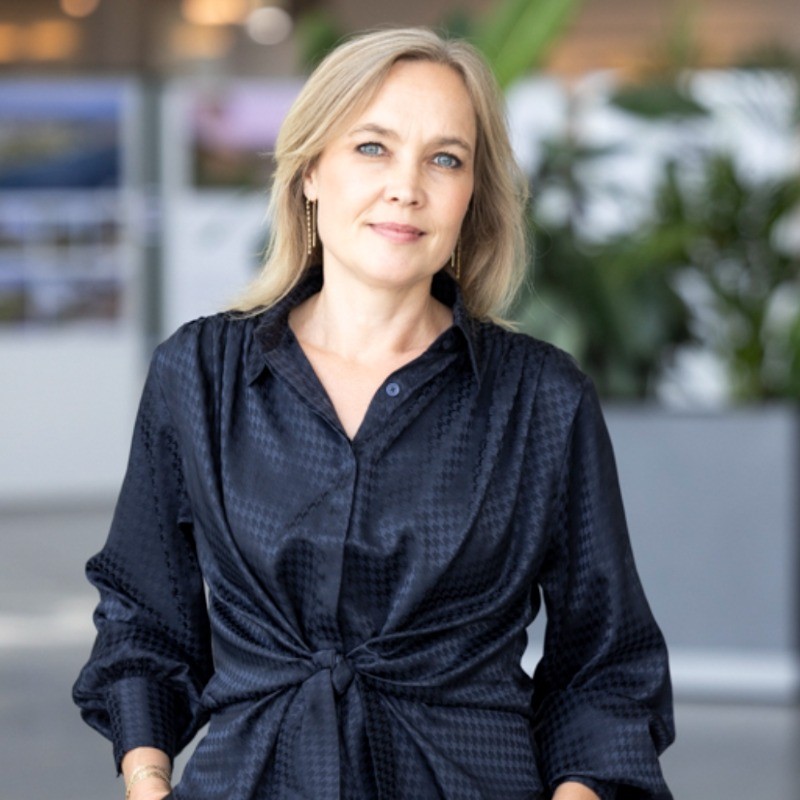
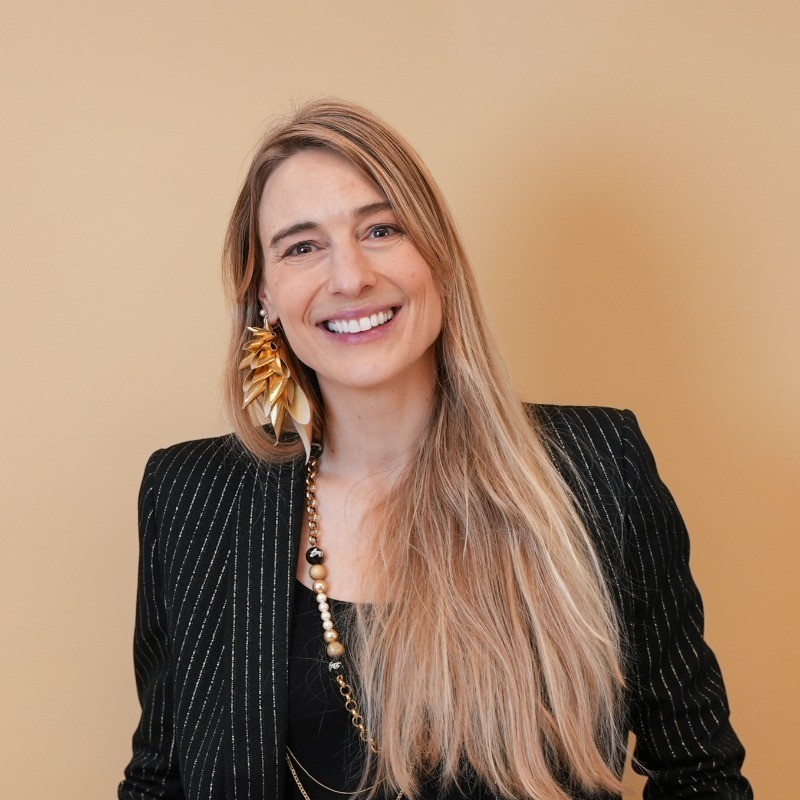
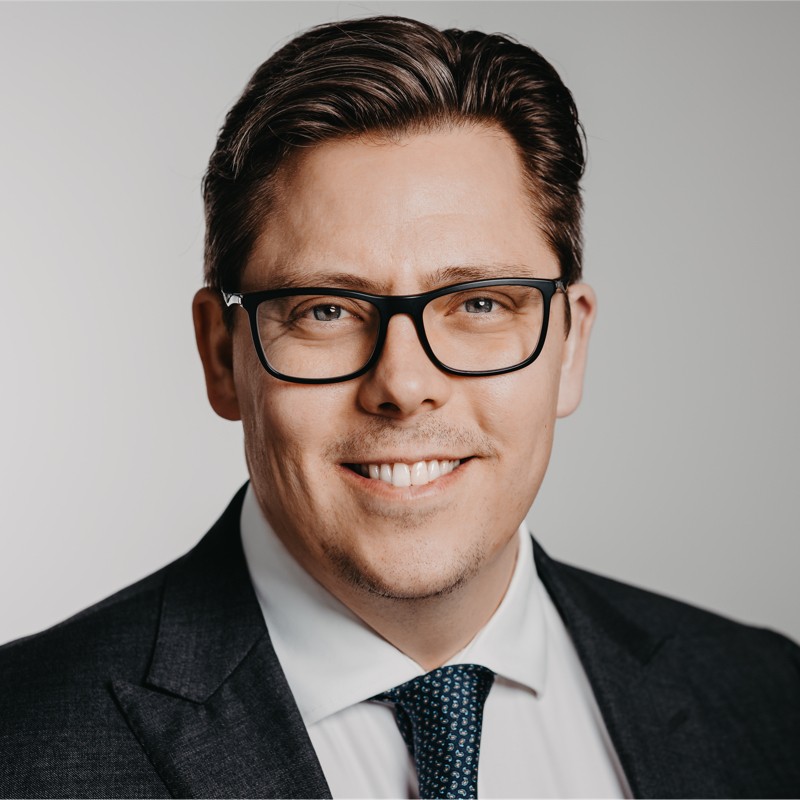
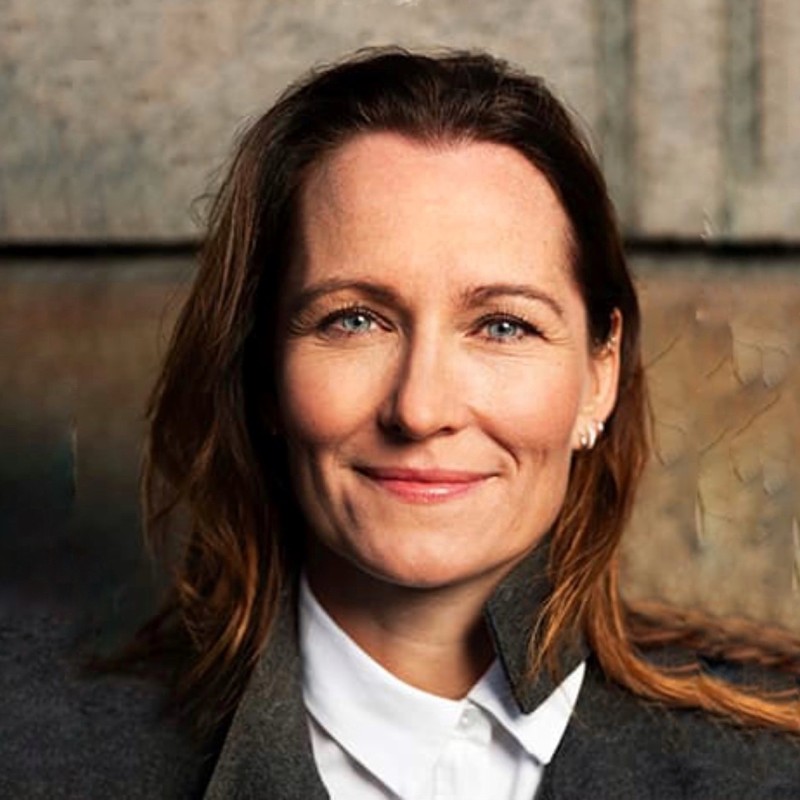
Today's guest is Gaia, an alumna of the Sales Management Master's program at CBS who is currently completing the Demant Graduate Programme. So far, her career has gradually shaped her path within Commercial Excellence, primarily in the medtech industry. She began as a student assistant at 3Shape, a global medtech company, where she worked with a strong operational focus on dental service organizations — large dental groups operating across multiple markets — gaining close exposure to how commercial processes support sales execution.
After graduating from CBS, Gaia joined Demant, where she explored Commercial Excellence across different business contexts: from a global perspective in the hearing-aid business to a local, in-field experience, spending six months working directly with the sales organization in Japan. She is now in her final rotation, focusing on the diagnostics business area. Gaia, welcome.
From academic theory to commercial practice
Let's explore commercial excellence. Really look inside a complex global medtech organization. Welcome, Gaia, and thank you for joining me. Thank you for inviting. Before we dig deeper into commercial excellence itself, I would like to start with the perspective that you build through relatively diverse, experiences in your early career. So I'm wondering, you know, looking back, what part of your academic journey, most influenced how you see sales, and organizations today?
Okay. So I would say that, when we are at university and I did a sales management master's program and, and an international management one, we learn how things should be in, in an organization and in an international organization. So it's very interesting to see, how you learn a course by course are all the different, different aspects when it comes to, to sales when it comes to data management, performance management and so on.
And then I think, there is an moment on when we get to, to work in a, in an actual company and understand that things maybe are not exactly as the textbook. But, but I would say that, learning exactly how international companies should work, it kind of give you this perspective when you join an international company on how would you like to things to be.
And, and I think like a working in an international team is also quite exciting because you can share this perspective and, and it can give an excitement and enthusiasm to, to bring forward ideas and projects. Interesting. But I would also assume that, having in mind that you've been working in different divisions within medtech, industry, I would also assume that in these different divisions, there are some similarities, that you can connect maybe with your academic, life.
That's for sure. And, and I think it was it was great being also a student assistant while I was studying, here in Denmark, because I could exactly. And right away try to apply, what I was learning to or to what I was actually was experiencing in the, in the, in the workplace. And, and there were some examples, for instance, when, when we're thinking about, theories like, I'm thinking about a course that we did that I had an, a professional selling where we talked about sales approaches.
And, and we talked about, consultative selling and, and then when you were in the, in an organization and you're talking about sales and you're talking with, with colleagues that have a year of experience, maybe they're referring to the same theories that you've studied in a specific, labeling sometimes, but, but they're talking in a, in a different way, calling it a maybe Socratic selling or, let's ask them any question while, we're talking with the customers.
So, I think in that sense, it was, it was interesting to, to see how the, the book translate into daily, daily activities. But then it's also also kind of important that you are very much aware of those principles from the textbooks. And then when you realize that different terms are being used in different companies, you are still able to connected with a baseline of, of, consultative selling.
What Commercial Excellence really means
So I really like that. And now let's move a little bit more towards commercial excellence. And I believe that the concept of commercial excellence is really interesting, one, because, you know, many people heard about that, many people are talking about that. But then sometimes we realize that not everyone really understand, what commercial excellence is about.
And there are still some misconceptions and misunderstandings there. Having in mind that, you spend some time, in commercial excellence, as such, I'm wondering what are common misunderstandings that people have around commercial excellence, or when you are talking to colleagues, you know, beyond the company that you are working for, and then you say, you know, you are part of commercial like you were part of commercial excellence team.
You know, what are their misunderstandings? I that's a super interesting question, because I feel like when we talk about commercial excellence is, of course, the name of our department in, in some of the major companies. But, but it's not a mandatory department, as you might have marketing, finance or, or, or under the part which is probably one of the sources of these misunderstandings.
Yeah. And it's, it can be exactly, a little bit, confusing and at times, and I would say that commercial excellence is probably also kind of an approach that has a it doesn't have a precise recipe. Right. So it's an every company might apply this, this theory and this approach in a, in different ways, according also to what they need.
So, I would say that sometimes it's very difficult to, to explain where commercial excellence is anchored within an organization. It can be within marketing. It can be more within sales. But I think when I'm trying to explain what commercial excellence does is, basically like that department that sits a little bit across that marketing, sales, sometimes finance, and it kind of very much connects what is, leadership and strategic thinking to the actual execution that happens in, in the markets.
How Commercial Excellence helps field sales
So, guys, I tried to translate it in this way. So I'm wondering, you know what? when commercial excellence does a really good job in the company, how does what does that change for salespeople in on the field? Okay. Well, I would say first of all, having a commercial excellence department in a, in my very, early experience, it means that the sales reps and the sales manager in the field have a channel to be heard.
So they have a channel to actually explain whether whether they have, challenges. Exactly or whether they have, actually a super best practice that they want to share across the organization. So the team becomes kind of like the, the way to communicate with, with leadership and, and where exactly they, the execution might happen.
So being heard and having almost, trusted the, department and team within the organization, which means that once when commercial excellence is shut down as department, salespeople are having more challenges to being heard, to be heard, and also to promote some ideas or challenges that they have on the field, like, understand, you correctly in that sense that could be a lambda.
Of course it depends. It can be that. Exactly. Commercial excellence is in the company as an approach, but it has a different name and it says it in a different team. But having clear, a channel where they can be heard for sure. It's, it's the key, for, for have this type of approach and this type of project having, having a life and an importance.
Risks, standardization, and organizational friction
And then, so we are very much aware of all benefits that commercial excellence is bringing primarily to salespeople, but then also due to organization as, as well. But I'm sure that there are some risks associated with imposing additional units within the organizational structure, especially when those organizational structures are very complex. So one more, unit of complexity still, could be risky.
So I'm wondering what are some risks that we can associate with, commercial excellence, department. So, you know what? If commercial excellence is too much focused on processes or standardization or. Yeah. It depends probably also a lot on the maturity of the organization because, I mean, the overall goal of commercial excellence for how I experience it is that, it's almost like a in-house consulting role within the company.
So it, it comes to, to assess. So what is the current, the current process is the current status of a sales company, and it brings a, like a, a toolbox that would kind of help you in and help the organization in itself to figure it out where we can get closer to this excellence that we are talking about.
So, and, and that's the tricky part to understand because when I say so organization which have sometimes perceived itself a very far away from, from the HQ and, and the global organization, has a somebody knocking at their door coming here. I'm coming here with my tool to actually trying to assess what you're doing. It can be a bit intimidating.
And, and I think that perhaps that's where, it's important to, to, to, to understand that it's, that it's that being heard and being able to build the trust and the relationship with the people, that's, that's the key. So if I understand you correctly, commercial excellence is there to really support salespeople. And despite the fact that we when we were preparing for it for this episode, we haven't really mentioned it, but I know that it's you've been also working on some project in Spain where you help, to people, on the field in terms of their territory management through commercial excellence, activities.
A practical Commercial Excellence project in Spain
Can you maybe tell us a little bit about that? Because that's a very good example how commercial excellence, can can make a real impact, which is very tangible for, for people on the field. That was one of the, project that, I was just supporting at the beginning of my graduate journey within demand. And, it was a process in which, I remember like, that we were conducted as a team from the local team, and that's already kind of signal of the fact that they needed our resources, they needed to support.
And, but it also needed some analytical power to some extent. And, and the process was exactly. Hey, we're going toward a big change. We were selling in a specific way. We're moving towards having a, unified team that will sell our products. So in that sense, there were some analysis needed before these changes actually could happen within the organization.
And being able to be there to support and dedicate extra resources when, when needed. I think that was, very important to me to see how the organization was ready to support that and how the team was perceived in that specific moment. So on, yeah. Commercial, let's say, emergency to some extent. But but I think, that also means that when there is, like a change from a strategic perspective.
So if we look at it more from a leadership perspective and a decision, from the decision to the actual execution, there are always many, many steps and being able to have a team that is, that has a project leader experience, but also analytical skills, it's an advantage to be sure that the from the strategy, there is also, also free execution.
Balancing global standards with local market needs
And then I would also assume that especially when we are talking about large, organizations which are present in many different global markets, the there is some kind of balance between trying to be as efficient and effective as possible in the local market and then having some gold standard or very standardized procedure of, you know, how sales is being executed.
I'm sure that commercial excellence has to say something in this balance. Can you comment, Elizabeth, on that? Of course. I feel like this team as, as of course, what I've been seeing and how I'm, I'm seeing it to going forward is like, the middle layer between, like, a decision that are taking top down and sometimes importing even bottom up, the advantages that, a team structure like this, I've been seeing that they know the countries very well.
They know the people, and they also know they're similarities across countries, but also the major differences. So when it comes to rolling out new standards, processes, this knowledge is crucial because then it's also a pre-assessment and also a sanity check whether like the, the, the process and the standard is, is there to actually support or it will create extra friction.
So, I think it's, it's a good knowledge base to have when it comes to, to build this a golden standard across the whole organization. Thanks a lot for all these insights about the commercial excellence. So now I would like to move a little bit of topic into demand. Graduate program, because you've been part of the program.
The Demant Graduate Programme
And, what I heard from you program is it was very, very interesting for you at least, because as a part of the program, you had the opportunity to, to be at different markets, to work with different markets. And as I understand, you are also continuing, in that sense. So I'm wondering, you know, let's now first focus on the program itself.
So graduate programs allow programs are allowing to graduates to move across different functions and different units, which means that instead of spending more time in a single role, you change roles. You change functions. I'm sure that there are some benefits around that, but I'm also sure that there are some, you know, risks. Or some downsides associated with it.
Benefits of rotating across roles and teams
Let's focus first on the benefits. I'm wondering, what do you see as a benefit, of being part of the graduate program? And then changing roles, every six months, if might if I don't, you can, it can vary six, eight months. But, I mean, at first I would say that there are way more benefits than downsides, but, in general, like, you learn a ton, you're learn a lot from so many different people.
Continuously. So your learning curve is not stiff. More if you can say that. And, I would say one of the super cool thing that I did, I experienced, that is the exposure that you get within the organization. So as a new employee, you're coming to an organization and you're trying to be up to speed to what's your task, what's your role, and what are your major stakeholders within a graduate program?
You do that, but you also know that you will stay within that team, within that role, for a short period of time. So you need to do it as fast as possible in order to become valuable for your for the project and for the task. You get the chance to work across different teams, different having different managers and, and work on different projects.
So I think that's, that's a super cool, aspect to consider when applying eventually for one. And plus you get a network of, of colleagues like you that are doing the same in other area of the organization. So not only you get the network within your area, but you get an external network of people that work in completely different things.
I started within Commercial Excellence, and I had colleagues working in I.T, working in operations or working at in attacks, for instance, which are an area of the business. And otherwise I would have never, even touched perhaps. And then I'm sure that tomorrow when you have some challenges, you know, with one of those, areas, you will have very easily someone to reach out and to connect and to have conversation to help you solve those challenges.
Why graduate programmes can benefit companies
I'm wondering, before moving to risks and downsides, I'm wondering from your perspective, what are benefits for the company to introduce a graduate program? Because, not many compared. Well, not all companies are having graduate programs. And some of the companies are really making an assessment. Should they have a program like that or not? And I'm sure that some of the people that are listening to this podcast, also maybe considering, you to introduce or not to introduce a graduate program.
So from your perspective, you know, what are the benefits for the company to introduce a program like this, first year, having graduates within an organization, it's a big investment. And, and that requires also having people within the organization that are willing to spend time in the teach and, and basically form the, the future professional, but at the same time, I think you very quickly realize that having a person that changes things so frequently and has such a broader network so faster, it becomes also a resource for the team because then you know that this person, even if for very short the work with other departments and can be a good
connector. And that's how I felt. Sometimes I'm like, you're mentioning a new problem to me, a new challenge that I haven't heard about. So I'm not an expert on this, but I might know who to reach out to ask. So that becomes a very, very faster angle. Good, a good advantage. But, also when you enter within, as a, as a full time employee within the workforce, you don't lose this network and this experience and, and, and you become extremely faster in, in connecting docs.
So, I think compared to, to other entry level roles, this gives very much of a boost, to the teams that you, that you work with now listening to, and I'm thinking about the company that I'm collaborating at the moment. And they have a very young team of amazing professionals and experts in their field.
And they are working, across three countries. However, most of the employees are kind of Gen Z employees, like super young, super creative. But then I learned that their communication pattern is a bit different compared to what I would expect. So most of their communication between them is based on texting. So they do. They do they text each other?
Sometimes they're really missing communication. Really. Sometimes things are being lost because of, some, you know, barriers and or noise in messaging and like, communications, I can really see the benefits of graduate program for, for this company because in that chance they would be able really to have people who are kind of boundary spanners and as you say, connectors among teams, that can go beyond, slack messaging and textual, messages.
The downside: handing over projects and losing continuity
So indeed, yeah. If you haven't considered before. So consider having a graduate, program. But as anything, there are also some downsides. What were the downsides for you, in terms of changing these roles? For sure, it more than a downside. I think it's more like a, a frustration and might come up while being a graduate is that you learn so much, you put so much energy, effort, passion in, maybe in a project.
And then of course, the rotation is limited in time. So you will handle it in 6 to 8 months. And, and sometimes you have the feeling that what you've done so far, then who's going to take care of the baby that you created and you take care for that for this month? So, you're missing a little bit the continuity in the work that you do.
And, sometimes there at the end is quite a that the closure is not there and the closure is not there, but in some cases, I think, it's still positive because you can still being reached out afterwards for, for some follow ups within the project that you did. But you always have this feeling of like, I needed to let go, the project that you did for that time, and that's, perhaps the sometimes, yeah, difficult to do so.
What working in Japan revealed about the market
So I would now go back a little bit to commercial excellence, but also your time, spent in Japan, working for, for demand. There. So I'm wondering, you know, are there some, moment in time when you realize, like, I would never being able to see, this if I would stay in Denmark in headquarter, if I wasn't, part of local team, in Japan, there are many example that comes to my mind, especially because, in Japan was also a very different culture for, from mine and, and from what I was used to, but, in general, there is an example that I, that I have which
is, being close to the customer. So while you're working HQ in, in a global environment, of course, you're close to the countries, but you're close to, to your colleagues in the, in the country, when you work in a local office, you, you also get closer to, to the customer to some extent. And, and as a local office, we, I remember we had this at this event with and with also customers joining and we met this owner, relatively very experienced within and within the field.
And I remember him having it and hearing loss himself. So, and that was, a paradox, like being at, it injured, event, having a hearing loss of yourself, and not wearing hearing it that time. So, being being exposed to that, to that, that time, it was very interesting because I remember asking the, the general manager that was at the event, like, but how so how come like he's not convinced yet that this actually is going to, is going to change his life in that sense?
And I remember that, from that, this discussion sparked and like a few months after and I was still in Japan, I got invited to this event with the same customer that actually finally tried and hearing it from, from us and, and he started actually like, being one of our major sponsor and, and that's, that's such a story that give you such a motivation now within the industry, within this sector, of course, but in general, like, it's something that as a, an employee that works in, in comics that you would an experience just only being sitting in global.
So being close to the market, being there, meeting the customer, it's also something that brings you closer to our to the sales rep. Right. and I will for sure always remember this, in this dynamic that I wouldn't have experienced somewhere else. So, so, so, is there something in in sales which, at least in your perspective, is more culturally, dependent than something else, like what are the elements in sales that are very car culturally dependent, but using your experience?
Cultural differences in customer visits and relationships
I mean, for sure, when we were talking about, what's the, what's the day or how's the weekend of our sales rep? There are some commonalities across countries. Like we talking about the visit? Planning the target. Of course, it depends on the sales cycle, but more or less, there are similarities. But when it comes to how an actual visit to the customer structure.
And now I'm talking more, of course, B2B sales, the relationship barriers, the efforts, the talks. And, and I remember in Japan, sometimes they were, they were pointing out that sometimes we visit the customer for so short just to show them that we are here. And there were visits logged it in, in our system very, very short, like 20 minutes, like a what do you talk in 20 minutes in just the time to arrive and then you leave?
I just left my business card to show the customer that we put effort. And I'm like, this is something that you will never see in the US. So I or a or any time in North Europe. Well, there are some elements that I think sometimes we should take into account more on how the relationship and the and the culture plays a role in a, in some countries.
And I would also assume that, you know, despite the fact that probably these stories are being told, you know, when you really experience them firsthand and when you really observe them, you, you kind of get understanding, which is on a higher level than just the story that is being told. Thanks a lot for, for this. Now talking about relationship between local markets and local product, you know, processes which are very specific for the for the local market, and then some global standardization which have to be in place.
Global standards versus local execution
I'm wondering, you know, in your experience, what is the best balance between the two, you know, how to find, balance where there are still some standardized procedures which are being adopted, locally, how the market is, like that, is still a challenge. I don't think I have the answer to solve it, now, but for sure, there are there are elements on like, of course, understanding what's the goal from the leadership and what are the companies going, what are the priorities and trying to match it?
What is actually the maturity and the tools that we have available? Sometimes it's like also being a pragmatic there, like a how closer we can get to these, to this standard that we the very that you are pitching to the countries and being close to the market, I think it gives us a good balance in understanding what, what can we push and what can, what can we do, perhaps.
And, and I'm sure that there are some frictions between global and local procedures. And, you know, who is winning and when tensions, arrive, between these two. So in my experience, it depends. So, there might be some processes that, that it's time to, to, to be pushed and, and then it's a matter to understand that not whether it's possible or not to do it, but it's like, what's the most important, step to take first?
And how do we get there? So I think in the end, it all comes back to, to let's collaborate. And we have the same goal, in in the end like that. That's very much the, the balance that, that's the it's important to find the I wouldn't say that there is like a, an actual winner or an actual loser.
Data, Commercial Excellence, and the future of sales
But there is, there is who, who who managed to find the best compromise. Okay. As we, as we are getting to the end of, of this conversation, I, I still have a few questions that I would like to, to ask. Now, having in mind the to spend some time in commercial excellence, and you are very much aware of, some of the goals or challenges, that commercial excellence, has and wondering, are there are some challenges that organizations are underestimating today?
That there must be many lenses. Let's start from there. What I could say is that, there is a perhaps like a big push towards, let's, let's be way more data driven where it's possible. And, and that's, of course, like a great thing. But that means in order to, to trust the data that we have, we also need to have a processes in place and good data entries.
And, and when we are talking, selling and what, what I've been saying sometimes it depends a lot on the story of the, of the company, on how the business has been developed. It's, how much the relationship was out there. What were the important things and now how the business is developing. Right. So I think, one thing is exactly like a pushing to have the data already, right away.
And another one is understanding also how much the process should, should change and how much adoption we should have in order to have the data in place. So there is also a good balance in trying to understand, of course it's important. How do we get there? Right as we were mentioning just before. So meaning that getting data does not really work by magic, but exactly one has to invest some time for means to someone needs to put time.
Someone needs perhaps to, to change their, their habits and, and so that's probably also what we can say, like a change management factor and, and what I also, noticed sometimes is that, also the ways we can input the data are not as, advanced that sometimes we expect them to be. So sometimes there are still, still manual processes that don't need to be to be tackled in order to, to get the data as fast without exactly spending extra time in, in delivering data.
Who creates the data?
Right. And so, you know, when we are talking about, you know, creating new data and entering new data, you know, who is, you know, who is the one to enter and create? Or most of the times that are, our sales people. And, if we're talking sets, of course, they are the ones that have the detachment with the customers.
They are the ones that are up there and they have the most information. Of course, there are other data points right from marketing, and from other departments that are more maybe admins, but it also comes back to how is the sales company structure. Do we have admin people? Sometimes there are no resources, so sometimes it's all goes back to the sales reps that we expect them to spend much more time with the customer.
The data paradox: more insight can mean more admin
But isn't that paradox a bit because how we talk about data and commercial excellence is that we need data to support people on the ground, people in sales to make better decisions, and to kind of freeze some of their time to spend more time with the customers. But then in order to create the data, in order to enter the data, we again rely to those salespeople to enter the data, meaning adding more admin work instead of really freeing their time.
So how to find the balance? Between all of that. And I think that's that's also at like the challenge. Right. And that's what also, my team and some projects that are related to my team, I think will focus on in the future as well, which is basically like trying to make this admin time as little as possible.
Still having a good data quality and that's why we are talking about the team like commercial excellence that can together with the local market and together with the global refining these processes. So it goes hand in hand to some extent. So having somebody that to keep revising the process and, and moving it towards these excellence that we are talking about, well for sure and trying to prevent these, these extra time that I revise or spending far away from.
I think that's very good sales pitch for salespeople. So if you tell them that, you know, commercial excellence is there to help you reduce admin workload and admin tasks and to free up your time so that you can spend more time with the salespeople, with, your customers. I'm sure that many of, people and I'm sure one of the goals was they would be very much, appreciating this.
Technology should reduce work, not create more of it
Finally, having said all of this, I'm wondering, so as organizations are becoming more data driven and technology enabled, you know what should, leaders be should what leaders should be careful not to lose? So if we are talking exactly more like, how can we use, like, the new technology to announce like our, our workload and so on?
It's exactly probably the element of discussion that we just had. So being able also to be sure that this technology is helping in and not creating extra, an extra work. Right. But I think, nowadays there are so many tools that need to be explored and that need to be evaluated in order to, to save time.
So to save time and to make process smoother. It's, it's all goes back to this balance on, knowing exactly what's happening in the market in order to be able to use technologies, it's best. And, and having a team that I would say knows that and can bridge that, I think it's a good advantage. It's a good starting point.
Closing remarks
I would like to finish with this and especially I, I really liked your your sentence when you said there are many tools out there and we have to evaluate them to really understand, which is most helpful and which is more supportive, to our processes and to people, on the field. Thanks a lot, guys, for being, my guest and I hope that we will be able to hear a bit more, soon from you, how your role is developing in the market.
Thank you so much. Thank you.




.png)











.jpg)