Sales as the bridge between products, partners, and customers
Introduction
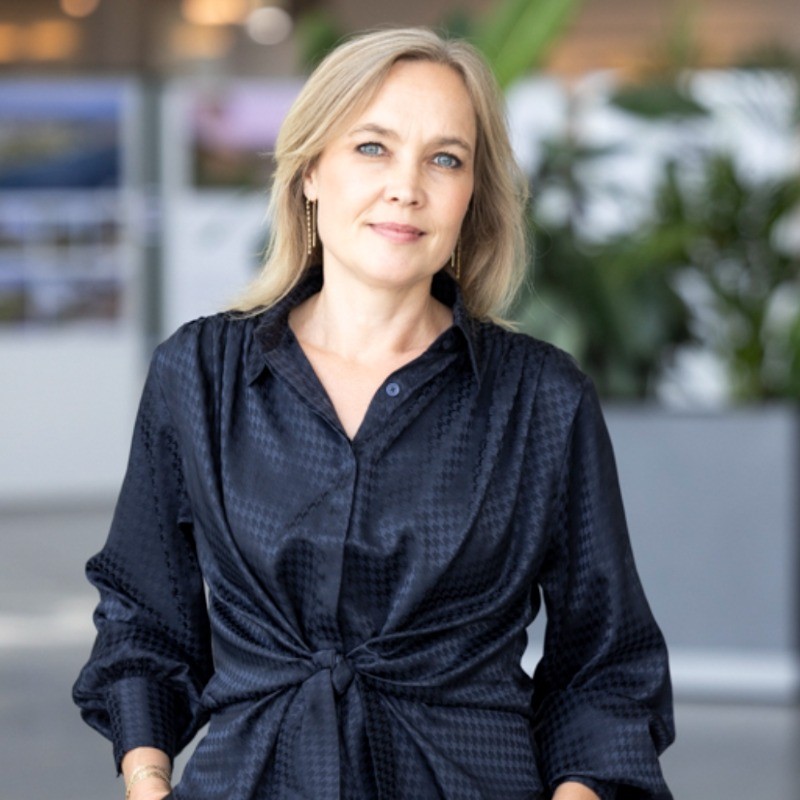
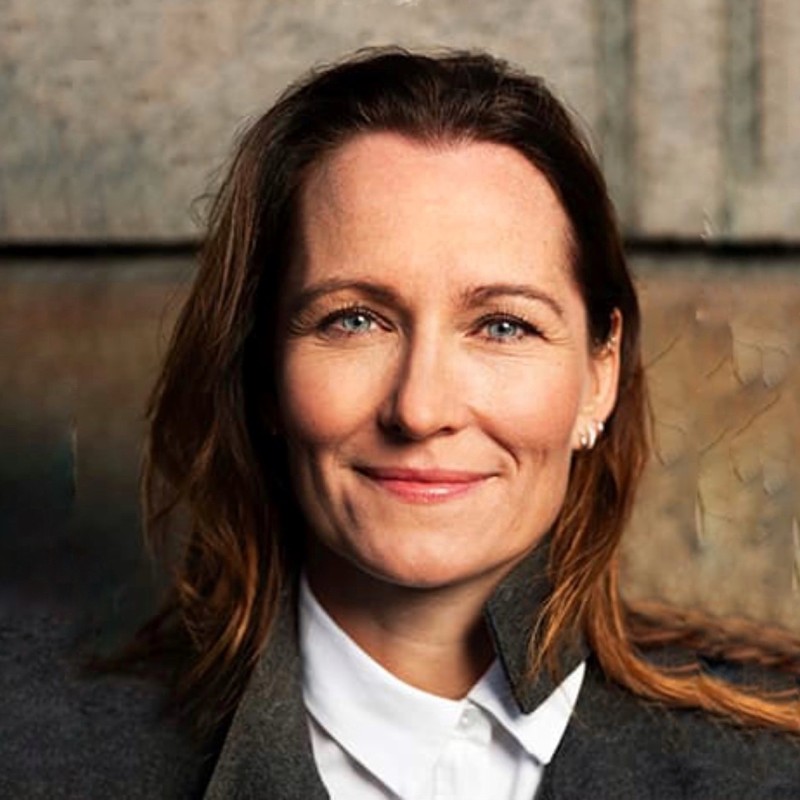
In this episode of Up Your Sales, we explore the role of sales inside complex international organizations. How does sales connect product, marketing, and distributors to real customer needs? Today's guest is Pia, Chief Sales Officer at XO CARE, a medical technology manufacturer selling through international distributor networks.
Pia has built and led commercial organizations across markets, navigating the realities of complex products, long sales cycles, and cross-border execution.
Pia, welcome.
From education to a career in sales
Pia, thank you so much for joining us. Let's start from the very beginning. Many sales leaders do not have some grand plan to be in sales, but rather their path is kind of shaped as they do and as they work. How come, you decided to, focus on sales and be in sales for so many years?
I think it started with my choice of education already because I'm educated within international negotiation, which of course, now in hindsight makes a lot of sense. It wasn't deciding into sales. My first sales job, though, came when I was starting is selling,
subscriptions, news newspaper subscription for Balance Consulting. So, so was it a decision?
No, it was more a natural, a result of, of personality and preferences. And today you are Chief Sales Officer at XO CARE. How do you define sales in XO CARE? How is it organized?
Sales as the bridge between product and customer needs
it is, let's say it's it's the interface from product to end customer or meeting customer needs. Meaning that we have, let's say, until a couple of years ago defined ourselves as a product company, I think goes with many of the companies where I've, I've been in many companies with high tech products.
So it's, it's the,
bridge or the, the closing that gap from product to customer needs. It's also from, let's say, inside the organization to the external market. So it's, it's, it's the glue and the bridge and the infrastructure. Yeah. What you what you're saying really reminds me to towards in academia, we very often define sales as boundaries and roles.
When the sales role is misunderstood or underleveraged
Yes. And, I'm wondering when you take that definition into your everyday life, is there any, situations where you believe that role is misunderstood or under leveraged
undelivered? Indeed, and not understood? Indeed, because I can see from from my daily work, it's both ensuring that, at the end as end customers understand, what they can achieve with our solutions, that means
that we, let's say, facilitate the hurdle race towards the customer and it's up to us to facilitate it, as well as bringing the it's a voice of the customer and here in customer as well as our distributors.
Slash certified partners, which is what they called in. It's okay,
to bring that voice into the product development. So so that is indeed,
underpinning that's also being a part of shaping the vision and the strategy for the company and following it. And, you know, recognizing it's at the end customer when they feedback to us why they invested in our solutions.
The productive tension between sales and R&D
And so if I understand you correctly, so customers do feed into sales and then sales feed into maybe research and development. Are there Are there some frictions between sales and maybe research and development in terms of the information that are being obtained from them? Of course. And, and unfortunately. So I would even say because, you know, when, when we bring, let's say my team, which is both sales and service, we meet a lot of customers and that's in customer, that's partners.
They give feedback to us, you know what they're missing, what could work better, how you know they imagine it to work or what situation we could improve their working environment. And that's one angle to developing both company and product. Of course. Then we have the
engineering team who are well educated in,
engineering software, mechanical hardware, etcetera.
And they get the inspiration from, let's say, trends outside of industry. And they believe, you know, this is going to when we come and believe this is going to win. And then it's a I wouldn't say a battle, but it's an a friction or a necessity in getting to the right solutions because customers know what they are missing today.
They do not necessarily know. To answer to questions that we have not posed to them yet, if you understand what I mean. And that's where the innovation where we also drive because we have, let's say we're connected into, into industrial and, well, in the industry, if it makes sense. So I think it's it's a necessity.
It's a battle, but it's, it's very, very good that it's it's presence. And I really like that you are talking about this tension that maybe exist between sales and research and development in a positive way, that when we have the tension, we are really able to navigate tension and to get something good out of it, which is going to be, efficient and productive or, and beneficial at the end of the day for both sides, customers and the company.
Where the tension comes from
But if we would like to dive deep into this tangent, over the years of your experience, I'm able I, you may be able to identify what is the source of the tension, or maybe misalignment is it's different. Formal education background or are we talking different language? Do we understand each other now focusing on sales and research and development?
Or maybe it's something deeper? So what is the core of the tension or source of the tension. Yeah. What's the source. It's I think it's multiple. It is of course you can say when, when you are in sales, you, in a very focused on the customer needs and how to, make customer benefits from your solutions because then they buy it, then you don't even have to sell it because they buy it themselves.
and that's the very strong focus of sales, the very strong focus of development. This product. and they don't spend a lot of time in the field or in, let's say, in the luxury of innovation.
and therefore, you know, they don't they're not exposed to the same call as we are called from customers or, or trends and that they're more into, let's say, following the engineering background, which, which is more, let's say product focused, obviously, because that's the education, that's their preferences.
Aligning sales, marketing, and product development
You know, if you ask them, where did it started? Most like this started also prior to choosing education. And then they don't they they don't appreciate or they they're not as exposed to the to the voice of the markets. Then much what you're saying is, is really interesting because it reminds me to, one oldie but gold. The article that was published many years back in Harvard Business Review in 2006.
So it's now around 20 years old. And, the article has very interesting title Ending the War Between Sales and Marketing. And then, it was promoting the idea that, yes, there is certain, well, war or tension between marketing and sales and then providing some very specific and concrete activities that the decision makers can do to make these two departments closer than they originally are.
So I'm wondering, do you maybe have some tips or tricks or advices, how to align sales and development? For example, because you said, people from development, they don't spend that much time with the customers or they don't spend time at all. So are there some, you know, rules of the game that you established throughout years, to understand how to make them closer.
Yeah. And yes. And it goes both for sales and marketing, sales, marketing development. Now, now, you know, in, in soccer being a smaller organization than, than some of the former, organizations I've been in where we work very, very closely on, let's say, meeting customer needs, it's a very sales driven marketing team at X, okay. I'm very customer centric.
But but of course, again, as with product development or R&D, marketing is driving the channels of communication. It's the brand. It's the, it's the brand guidelines. It's the social media channels, etc. it's very sometimes hard for them to it's to accept the fact that our distribution partners, for example, are not living up to our brand.
IT guidelines in describing the brand and describing the products in let's say, running the campaigns or running the messaging as tight as we do. And of course it is because it's their job to, let's say, push that agenda. The fact is unfortunately also that we're not alone at the partners. And that's where it becomes difficult.
And when we have, when we work on on mindshare with our partners, we do that in very various topics. One of them is, marketing wise, presenting our solutions in the best way possible. But it's, you know, it's it's a multiple strengths. So that's
one of the topics where we succeed together. But but not always have, let's say the same
prioritization and you.
Distributors and shared customer ownership
So we've been talking about role of sales internally within the company. And relationship with other cross-functional units. And now we are moving a little bit more to external the role of sales, especially in relationship with, distributors, because you are operating on international markets with a wide variety of, of distributors. And I'm always wondering in this situation, who owns the customer?
Is it, distributor that owns the customer or manufacturing firm in this situation? In this case, XO CARE? To owns the customer. How do you navigate? It's the that's the center of discussion. And I think, you know, first of all, I believe it's a shared ownership. And that's because when I look on in customers here being intensive industry or dental practices, we, we deliver, we develop, deliver the product and the concepts.
Our partners deliver. The after sales and the service. So, you know, one can't can't come without the other historically. And that's not only in ECS, okay. But also in the other companies I've been been at. It was a matter of, let's say, the, the manufacture of it, delivering the product at the doorstep and then hoping that it would
arrive.
Well, at the end, customer, that shame is changing because we of course believe that we
own the customer as much as our partners. And what partners would say on that? The ones who also understand that the dynamics are changing. I would say from my perspective, a lot of my partners or our actual partners understands this because they understand that their, you know, their value is very much dependent on the value we create.
And, and, and our understanding of the end customer is very important again, to make that business sustainable. Some of them understands it's other of them, hesitant to let us interact with the end customer because, you know, then you could argue, what's my value in this? Which, which, which I honestly, from a pure heart doesn't understand, because if again, you know, you can't force yourself upon someone just because you know, you are you are trying to push the way from the equation.
I believe it has to be a strong partnership. I believe you have a shared ownership. And again,
to your own customers and the customers are there if
you know, value the, the service and product you offer. So in order to meet the customer needs and keep them in, let's say in the family it's a shared ownership.
When distributors carry competing or complementary products
But but it's changing and I think it's changing. Let's say in many, many, many, many industries. So it's change that. It is shared ownership. And I completely agree with it. But I assume there is another level of challenge because, most of your distributors, I would assume, are not exclusive distributor is it's, exclusively distributing, your own products, but they are also distributors for maybe competitors or some, products that could go with, with probably with it's you are producing.
So how to deal with that new layer of complexity. Yeah. I, you know,
we have from, from let's say one point we have partners who, solely are working with our products. So they are, of course, very, very dependent on,
on what we deliver and the partnership. Otherwise they don't. They are out of business.
Then we have some others who are,
very big in products, offering us, well, offering similar or alternative products as well as complementary so they can maybe, you know, can have up to up 800 products. So
our challenge is that for the ones who where we're just one of many, we're there because it's strategically important for them that the that we're there because there are customers demanding our solution.
And that is customers wanting exactly what we offer. And, and, and that makes,
interaction from us to end customer very, very important. And that of course, also let's say keeps a good balance between us and the partners,
that they know and we know that this is a strategically important solution for them. It's you mentioned that, you do have some, distributors working exclusively.
Close distributor relationships and market triangulation
With you and, in academia lately, we are discussing, concept of these close relationships. Because usually we would consider these close relationships between manufacturer and distributor as something which is very positive. But nowadays we are also realizing that sometimes these close relationships could be a blinding a little bit. Or maybe, put you in a position that you are not aware of.
Certain behavior of distributor. Can I ask you for, for comment on on that, or at least something based on your experience? Did you experience, some close relationships with distributors, to have some negative effects or some disadvantage? Now, when you say closed, relationship, what we have is that we have multiple partners in, in more or less every market where, you know, it's very, very rare that we,
have one partner who is exclusively our partner in a area.
So we have multiple sources of information, market information and then we are often at exhibitions, at events. Social media in contacts is so so I'm not you know. No I don't see it as okay. But but then it seems that you also triangulating information that you are really obtaining not only from a single source, but rather from multiple sources, on the market in, in based also on the fact that we have very engaged and customers so they are reaching out to us and then we have multiple multiple partners, partners of you are present internationally or globally?
International sales across cultures
Yes. And working with distributors in many different countries, meaning different cultures, different way of running the business, establishing relationship, doing business. But can you tell us a little bit about that? Because sometimes being based in Denmark, we even consider, you know, covering countries around Denmark as international expansion. But do you go much beyond this, that now?
I'm so fortunate that I have been,
present in a big part of the world. It's a fact of un accepting that it's very different
a lot of other nationalities are very different and value different things than we do. Denmark is not the center of the universe.
And, and being in the markets, being with partners in their part of the world is, let's say, establishing the trust and the communication and the shared understanding.
And that's, that's one of the keys to succeeding is understanding what is happening. You know, what are they valuing? What's what's the dynamics? How are they communicating? How are they dealing? How are they what's what's the dynamics? And then you can,
ensure your communication runs the entire way through. Can you maybe share some of the insights?
Lessons from China, Italy, and other markets
So for example, if you would be asked by someone who is considering Asian market or South Asian markets to, to be specific, are there some specifics that you would like to share, of around doing business in markets which are very much different, to markets that we are familiar with in, in Europe.
Yeah, I can say from one of my experiences in China, for example, that there you have to be very, very strict on the, let's say the, the high accuracy, you know, who speaks first, who drinks first, who presents first.
It's a fine
role of happenings until you have a shared understanding of where you go. And then it's connecting and connecting and connecting. That's one way of doing it.
When we are in Italy, for example, it's a lot of, negotiating back and forth, and we are part of the equation and it's a bit, hectic where it's a bit more distance in the north,
Even though I experience now in we're primarily in Europe and I experience that when moving internationally, moving culture. I was a bit closer to each other now in what I in, in that
we also introduce them to each other. So they also learn from each other and
learn the dynamics and getting inspired from each other and from our collaboration.
Leadership lessons from a career in sales
That's a very interesting. And, I can imagine how your, your day at work looks like. Why? It's an indirect. It's with all these different stakeholders, but also trying to adjust to their cultural norms, around the world, when we are, approaching, to the end of, of our podcast. So I have some final questions, for you.
So looking back across your leadership experience, what is the biggest lesson you've learned about the role of sales in organizations? It is always to keep, let's say, the hurdle race towards the customer in mind because, you know, there are bottlenecks throughout the equation. and, you know, you don't succeed more than the narrowest bottlenecks, so to speak.
And that changes over time. So be aware of whether it's in the market at the end customer, whether it's in let's say in the partner set up, that you also have to keep on, let's say developing or whether it's in your, in your own that's international team, whether it's in headquarters, it's always keeping an eye on every part of that equation.
Otherwise you tend to
oversee the, the, the challenges. And I cannot help myself to, to have one more follow up question. Because I guess that, you know, when we start with our career, we tend to prioritize some of the activities or tend to prioritize, some of the relationships, and whatsoever.
What to prioritize earlier in your career
If you would be able to give yourself advice many years back, is there something that you believe should be prioritized?
I think let let me say I would rather make sure to prioritize the, let's say, relationship and the trust part of it because it's, it's it's humans doing business. And then maybe sometimes, let's say trust the process and not focus solely on numbers, even though it is, at the end a numbers game.
but results come from, let's say, activities. So ensure the activities. And thank you so much for that because, now I, I will quote, to quote you often, with my students, because sometimes especially nowadays, having in mind the rapid development of technology. Yes, I have a feeling that we tend to forget that at the end of the day, humans are doing business.
Closing remarks
Thank you so much. For those listening, if you lead sales, remember, your job isn't just to close the deal. It's to connect organizations to reality. Yes. Thank you. Okay.




.png)
















.jpg)